The Federal Government has Crossed too Many Boundaries to Create Intentional Harm for the Rockenhaus Family
On January 13, 2026, Adrienne Rockenhaus publicly disclosed something that should never be routine in a country that claims to respect constitutional rights.
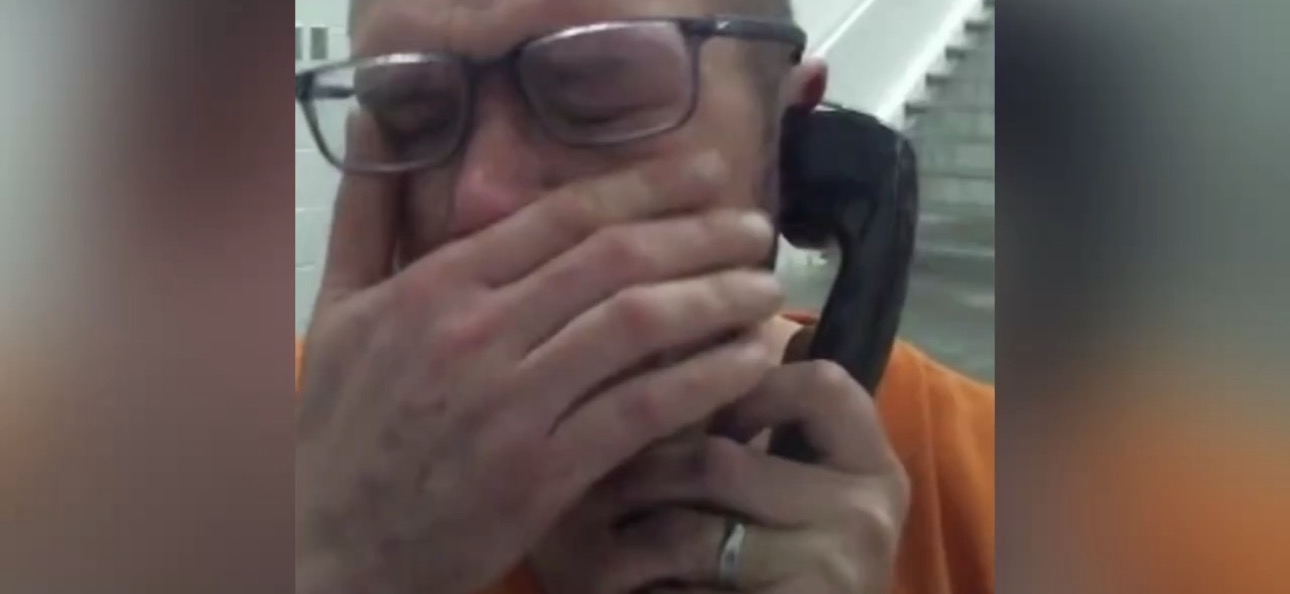
Her husband, Conrad Rockenhaus, a disabled veteran who had recently been released from solitary confinement, called her to say that “blue badges” had appeared at FCI Milan to question him about her, in connection with an investigation.
As he began to explain what was happening, Adrienne did the only responsible thing a spouse and advocate could do:
She told him not to answer questions without a lawyer present.
The call was then disconnected.
Shortly afterward, Adrienne issued a public demand:
STOP IMMEDIATELY. Leave him alone unless his lawyer is present.
That message is not emotional excess.
It is a statement of basic constitutional boundaries.
What This Moment Represents
This is not about cooperation versus defiance.
It is about consent, capacity, and coercion.
Conrad Rockenhaus is:
- a brain-injured veteran,
- someone whose medical condition has been repeatedly documented,
- someone who has just emerged from Special Housing Unit (SHU) confinement,
- and someone whose ability to withstand questioning without counsel is profoundly compromised.
When federal agents approach a person in that condition, especially inside a custodial environment, the power imbalance is absolute.
There is no such thing as a “casual conversation” in a prison.
There is no such thing as “voluntary” when the person being questioned is incarcerated, injured, and isolated.
Why the Cease-and-Desist Was Necessary
The Urgent Public Notice published by the Rockenhaus family makes one thing unmistakably clear:
Conrad Rockenhaus does not consent to questioning by DOJ or OIG agents without counsel present.
That is not obstruction.
That is not evasion.
That is the law.
The right to counsel exists precisely because history has shown what happens when authorities question vulnerable people without protection:
- statements are misconstrued,
- pressure is applied implicitly,
- silence is interpreted as guilt,
- confusion becomes evidence.
For a person with a traumatic brain injury, those risks are magnified.
Why This Crosses a Line
What makes this moment especially alarming is timing and context.
This questioning attempt did not happen in a vacuum. It followed:
- months of public documentation and complaints,
- a formal demand for an OIG investigation,
- allegations of retaliation and medical neglect,
- and Conrad’s recent removal from SHU after intense public scrutiny.
Approaching him now, about his wife, without counsel present, raises serious concerns about:
- intimidation,
- witness interference,
- and disregard for medical vulnerability.
That is why Adrienne’s response was immediate and unequivocal.
This Is Not About Hiding the Truth
Adrienne has not been silent.
Conrad has not been silent.
They have published documents, videos, audio recordings, court filings, and sworn statements. They have put their lives under a microscope not because they wanted attention, but because they were not being heard through ordinary channels.
Insisting on counsel is not hiding anything.
It is the only way to ensure that whatever is said is not twisted into further harm.
Why Public Witness Matters
Adrienne did not whisper this into the void.
She made it public.
She did that because history shows that abuse thrives in silence, and that vulnerable people are safest when scrutiny is bright and unmistakable.
Her message was not theatrical. It was protective.
Leave him alone unless his lawyer is present.
That is what standing between a loved one and institutional harm looks like.
A Line That Must Be Respected
This is where the line is:
- No questioning of Conrad Rockenhaus without counsel.
- No pressure disguised as “routine inquiry.”
- No exploitation of injury, fear, or isolation.
- No further harm under the guise of investigation.
Cease and desist is not a suggestion.
It is a boundary.
And boundaries exist because people have been hurt when they were ignored.
Conclusion
This moment is not about guilt or innocence.
It is about whether the system will respect the humanity of a disabled man and the voice of the woman trying to keep him alive.
The law is supposed to protect people like Conrad Rockenhaus, not test how much they can endure.
When a family has to issue a public cease-and-desist just to stop questioning of a brain-injured veteran without counsel, something is deeply wrong.
And it is right to say so out loud.